
Repurpose Long Form to Short Form: 5 Steps to 10x Content
Follow these five steps to turn long videos into short clips, from planning and AI extraction to editing, platform formatting and distribution.
On this page(17)
- Key Takeaways
- Why Repurpose Long Form to Short Form Content?
- The 5-Step AI Workflow to Repurpose Long Form to Short Form
- Step 1: Plan Long-Form Content for Repurposing
- Step 2: Automated Clip Extraction with AI Tools
- Step 3: Refine and improve Short-Form Videos
- Step 4: Craft Platform-Specific Hooks and CTAs
- Step 5: Publish and Analyze Across Platforms
- Common Mistakes When You Repurpose Long Form to Short Form
- Choosing the Right Tools for AI Repurposing
- Frequently Asked Questions
- How does AI help repurpose long-form content?
- Which platforms benefit most from repurposed short-form content?
- What are the key elements of an effective short-form video?
- Can I repurpose old content effectively?
- Conclusion
- Sources
Creators often struggle to produce enough content to maintain audience engagement across multiple platforms. The solution lies in systematically converting existing long-form content into numerous short-form assets, amplifying reach without escalating production demands.
This article outlines a practical, AI-driven workflow that helps you repurpose long form to short form content efficiently, enabling 10x content output from a single video. Specifically, use this framework to evaluate automated clipping software before committing production time.
Key Takeaways
Repurpose long form to short form content for 10x reach.
AI tools automate clip extraction and platform improvement.
Designing long-form for repurposing maximizes short-form value.
A structured workflow can reduce repeated manual work and make production easier to sustain.
Tailor short-form content to each platform's native style.
Why Repurpose Long Form to Short Form Content?
Repurposing content transforms a single strong piece into multiple variations, increasing its value and reach. This strategy multiplies distribution opportunities without proportionally increasing production time, making it an economic necessity for creators.
Rather than creating new content from scratch for every platform, you extract more value from what you already have. This approach is particularly useful for busy creators, faceless YouTube channels and content teams.
Repurposing tools can reduce repetitive clipping, resizing and captioning work, but the time saved depends on the source material, tools and level of human review required.
The 5-Step AI Workflow to Repurpose Long Form to Short Form
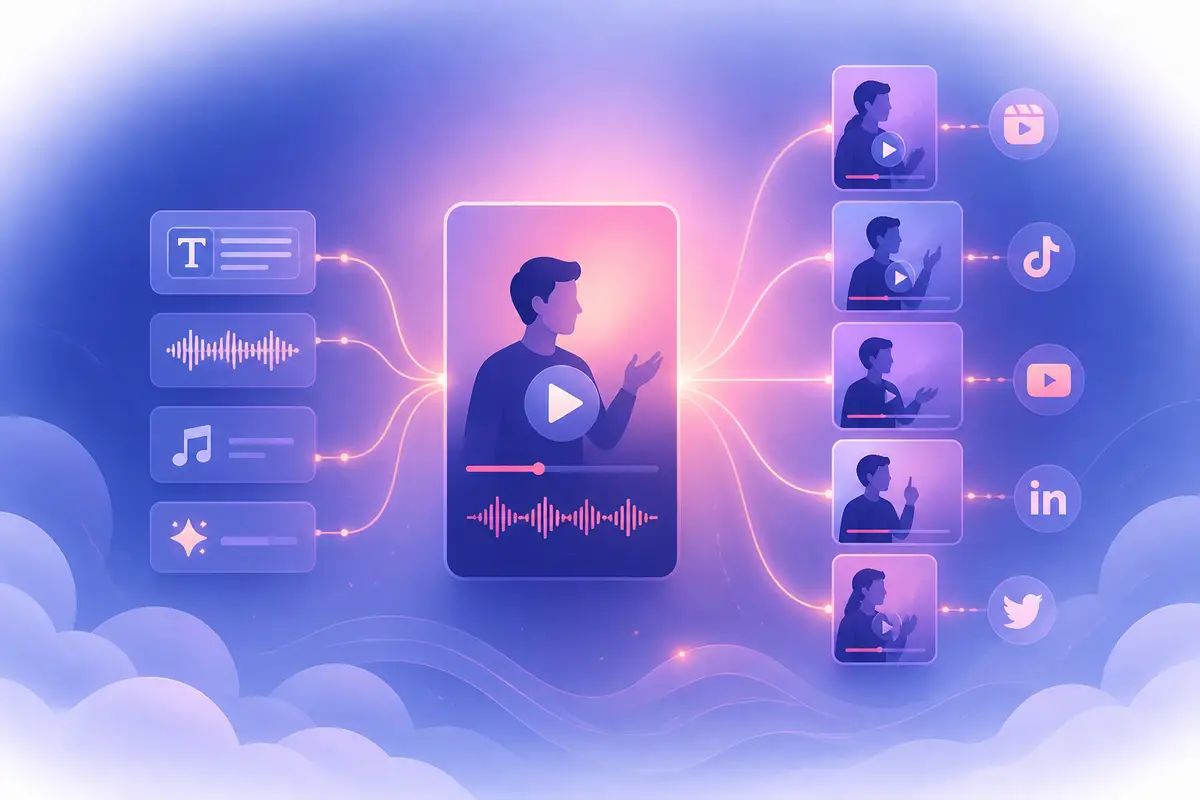
Converting longer videos into concise, engaging clips for platforms like TikTok, Instagram Reels, and YouTube Shorts requires a structured approach. An automated clipping workflow using AI can accelerate this process by identifying highlights, resizing footage, and adding captions.
This systematic method ensures efficiency and maximizes audience engagement across diverse platforms.
Step 1: Plan Long-Form Content for Repurposing
The foundation of effective repurposing begins with the initial long-form content creation. Design your main video with future short-form extractions in mind, building in clear, standalone segments and distinct talking points. This proactive planning simplifies the later process to repurpose long form to short form.
Consider where natural breaks or clear soundbites might occur. Structuring your content around these moments allows AI tools to more easily identify impactful clips. For instance, a long-form tutorial could feature distinct steps that can each become a separate short-form tip. This makes the later clipping process much smoother.
Step 2: Automated Clip Extraction with AI Tools
Many AI-powered tools specialize in automatically converting long-form content into multiple short-form videos. Platforms like Viblo can identify high-performing moments within a video, creating TikTok-ready clips. These tools analyze speech patterns, engagement metrics, and visual cues to extract the most clear segments.
Upload your long-form video to your chosen AI repurposing platform. The AI will then process the video, suggesting several short clips tailored for different platforms. This initial automated extraction saves significant manual editing time, boosting your publishing speed substantially.
Step 3: Refine and improve Short-Form Videos
Once the AI generates initial clips, human oversight is important for refinement. Review each suggested clip for context, clarity, and impact. Adjust start and end points to ensure the message is complete and engaging, then improve the clips for vertical formats.
Beyond simple cropping, this step involves adding dynamic captions, relevant sound effects, and potentially background music to improve viewer retention. Ensure consistency in branding elements like lower thirds or logos. Each short-form piece must stand alone, delivering immediate value to the viewer.
Step 4: Craft Platform-Specific Hooks and CTAs
Each social media platform has unique audience expectations and algorithmic preferences. A strong hook is essential within the first 1-3 seconds to grab attention immediately. Follow this with a clear call to action (CTA) that aligns with the platform's user behavior. For TikTok, a fast-paced hook and trend-aware CTA might work best.
On YouTube Shorts, a curiosity-driven hook followed by a prompt to subscribe or watch the full video is effective. Customize these elements for every platform to improve engagement and direct traffic to your core content or offerings.
Step 5: Publish and Analyze Across Platforms
After improving your short-form content, schedule its publication across all target platforms.
Consistent publishing is key to building an audience. Use a social media management tool to streamline this process. Crucially, analyze the performance of each short-form video on its respective platform. Track metrics such as watch time, engagement rate, and click-through rates.
Iterative testing, rapidly repurposing proven content segments into various formats, compresses the feedback loop. This data offers valuable insights into what resonates with different audiences, allowing you to refine your repurposing strategy further.
Common Mistakes When You Repurpose Long Form to Short Form
One major pitfall when creators repurpose long form to short form is treating short-form content as merely cut-down versions of the original. Each short video must deliver standalone value and fit the native style of its platform. Failing to adapt content to platform-specific pacing and formatting can lead to low engagement.
Another common error is neglecting to add platform-specific hooks and calls to action. A generic clip without a strong opening or a clear prompt for viewer interaction will likely underperform. Also, inconsistency in publishing frequency can undermine audience building efforts.
Production systems can become difficult to manage when they move from occasional uploads to consistent multi-platform publishing without enough capacity, review time or reusable structure.
Choosing the Right Tools for AI Repurposing
Selecting appropriate AI tools is important for an efficient content repurposing workflow. These tools should offer automated clipping, transcription, and editing features to streamline the process. Look for platforms that integrate smoothly with your existing content creation platform.
Here are key features to consider when evaluating AI repurposing tools:
Automated Highlight Detection: AI that can pinpoint engaging moments within long videos.
Vertical Video improvement: Tools that automatically format clips for TikTok, Shorts, and Reels.
Captioning and Subtitling: Automatic generation of captions for accessibility and engagement.
Brand customisation: Ability to apply consistent branding, including fonts and colors.
Batch Processing: Capacity to convert multiple long videos into short clips simultaneously.
Examples include services like Opus Clip for fast short-form video generation, or more comprehensive AI video editors that allow greater control over individual clips. Always choose tools that match your specific workflow needs and budget.
Frequently Asked Questions
How does AI help repurpose long-form content?
AI tools analyze long-form videos to automatically identify clear highlights, transcribe speech, and suggest platform-optimized short clips. This reduces manual editing time and scales content production, allowing creators to generate multiple assets from a single original piece efficiently.
Which platforms benefit most from repurposed short-form content?
Platforms like TikTok, Instagram Reels, and YouTube Shorts are optimized for short-form video consumption. Repurposing long-form content into native short clips for these channels helps improve reach, engagement, and audience growth across diverse social media ecosystems.
What are the key elements of an effective short-form video?
An effective short-form video needs a strong, immediate hook within the first 1-3 seconds to capture attention. It should have a clear, concise message, dynamic visuals, and often includes on-screen captions or text. A clear call to action tailored to the platform is also vital.
Can I repurpose old content effectively?
Yes, you can absolutely repurpose old content. Review your highest-performing long-form videos or blog posts for evergreen topics or impactful snippets. Use AI tools to extract new short-form clips or text content to give old material new life and reach new audiences.
Conclusion
Strategically repurposing long form to short form content is an essential practice for modern creators looking to improve their output and reach.
By planning content with repurposing in mind and leveraging AI-powered tools, you can transform a single long-form video into dozens of platform-optimized short clips. This workflow boosts efficiency, helps you avoid production bottlenecks, and extends your content's lifespan.
Start implementing this 5-step process today to amplify your content strategy and grow your audience across every platform.
Sources

Written by
Continue Learning
All guides →
How the YouTube Algorithm Works for Faceless Channels
Learn how viewer choices, retention and satisfaction influence YouTube recommendations, and how faceless channels can use their own analytics.

YouTube Niche Ideas for Automation Success
Evaluate faceless YouTube niche ideas with a 100-video test, audience research and monetisation planning before building your production workflow.

YouTube SEO Faceless Channel: 7 Tips for Success
Improve a faceless YouTube channel's discoverability with practical guidance on topics, titles, thumbnails, descriptions and viewer response.